
Martin Wølstad – A Klondike Gold Prospector
What would make a young man — just sixteen years old — leave his parents, siblings, and home to venture out into the world? As part of Migration Year 2025, we share the story of Ole Martin Vølstad, a farmer’s son from Tasta near Stavanger, who became a Klondike gold prospector in Canada. During his time abroad, he Americanized his name to Martin Wolstad. When he returned to Norway as a Norwegian-American, he was known as Martin Wølstad.
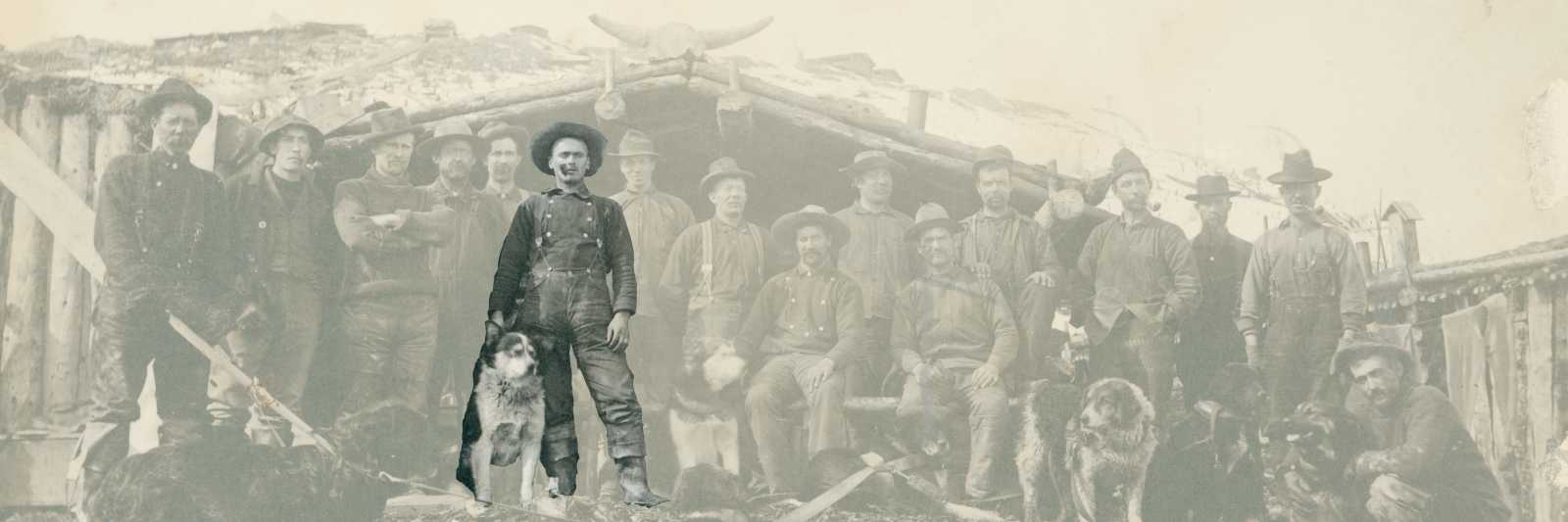
The Gold Rush Begins
On August 16, 1896, a major gold strike in the Klondike region of Yukon, Canada, set off what became known as the Klondike Gold Rush. Newspapers around the world reported the discovery, sparking “Klondike fever.” Thousands of hopeful prospectors sold everything they owned to head north. Many were unprepared for the bitter cold, harsh terrain, and grueling physical labor. Being early in Klondike proved crucial for success — something Martin Wølstad’s story illustrates.
Martin Wølstad and the Gold Finds
Martin Wølstad — the central figure in this migration story — was in the right place when rumors of gold circulated in Yukon in 1893. We know today that he struck it rich and became a prosperous man. A photo album documenting his experiences became a treasured keepsake for him and generations after.
The Klondike Photo Album
Martin’s album of Klondike photographs has likely been shown many times. The binding has long since fallen apart, leaving individual pages with mounted photos. These images were taken by renowned photographers such as Eric A. Hegg, Arthur C. Pillsbury, and Asahel Curtis.
The subjects include Martin himself, fellow prospectors, Indigenous people, and key events in the goldfields. You can explore these photos in detail on Digitalarkivet.
Three Photographers Who Captured the Gold Rush
Rising rumors of gold and the flood of fortune seekers heading to Klondike also attracted photographers eager to document the journey, the working conditions, and life in the mining camps. Martin Wølstad’s album features images by three prominent photographers: Eric A. Hegg, Asahel Curtis, and Arthur C. Pillsbury. Their work offers a unique glimpse into the Klondike Gold Rush and Martin’s own story.
Eric A. Hegg (1867–1947)
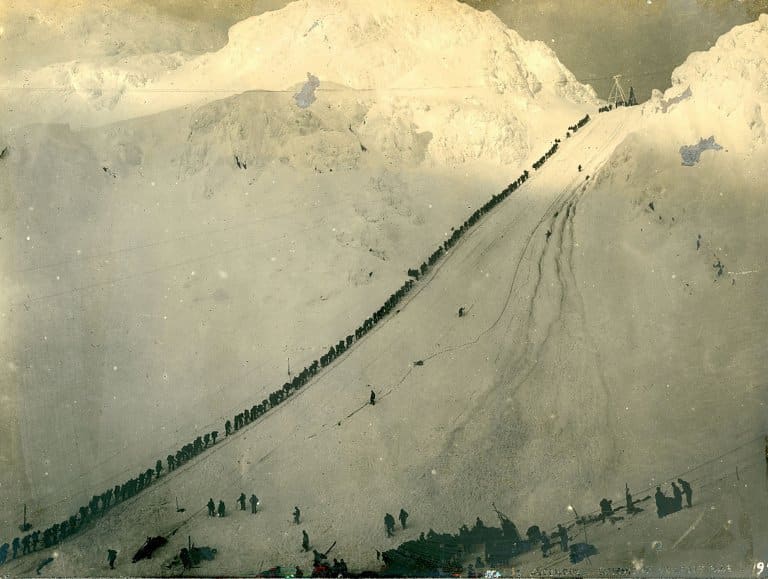
Swedish-born Eric A. Hegg is best known for his iconic photograph of prospectors climbing the Chilkoot Pass. He operated a photo studio in Dawson with partner Per Edward Larss, and Martin may have purchased several of his prints there. Hegg photographed both people and landscapes tied to Klondike mining activity. More than half of the images in Martin’s album were taken by Hegg.
Asahel Curtis (1874–1941)
Asahel Curtis traveled to Klondike in 1897 to document the gold rush. In addition to photographing, he worked as a miner at one of the claims. Curtis became known for his striking portraits of prospectors. Martin and his crew may have hired Curtis for professional photos — he captured Martin and his colleagues at the claim he shared with Daniel Sanderson.
Arthur C. Pillsbury (1870–1946)
Arthur C. Pillsbury was both a photographer and an inventor. He designed the first rotating panoramic camera, and his technical innovations made him a pioneer in photography. Pillsbury’s work is the third major presence in Martin Wølstad’s album.
Family and Early Life
Ole Martin Vølstad was born in December 1872 and baptized two weeks later. He was likely named after his parents, Ole and Malene, and was their sixth child. The family lived on a farm in Tasta, near Stavanger, where Ole Martin grew up with five older and four younger siblings.
The three oldest brothers – Thore, Fredrik, and Olaus – were born in Gjesdal, where Ole Martin’s parents lived during their early years of marriage. In 1860, the family moved to a farm on lower Tasta, and the household grew significantly. The year before Ole Martin’s birth, his sister Berthe Karine arrived, followed by several more siblings.
Confirmation and a Foster Child
When Ole Martin was confirmed in the fall of 1887, he was an older brother to four younger siblings: Thorvald Andreas, Marie, Olaf, and Secilie Margreta. A foster daughter, Marie, also grew up with the family. She was the daughter of Ole Martin’s eldest sister, Elen Severine, who married the year before his confirmation. Marie was only a month old when her mother died.
A Brother in America
Ole Martin’s brother Olaus went to sea shortly after his own confirmation, leaving the family and his one-year-old brother behind. His first voyage on the ship Vestlandet took him to America, followed by trips to Antwerp and England. He also visited London and Hamburg before signing off. Later, Olaus sailed to Rio de Janeiro and disembarked there in 1882.
The seamen’s roll shows that on February 17, 1883, Olaus received permission to emigrate to America. Immigration records from Ellis Island list him as a passenger on the ship Poland, which sailed from Copenhagen to New York in March 1883. According to his own statements, he planned to continue to Minneapolis, Minnesota.
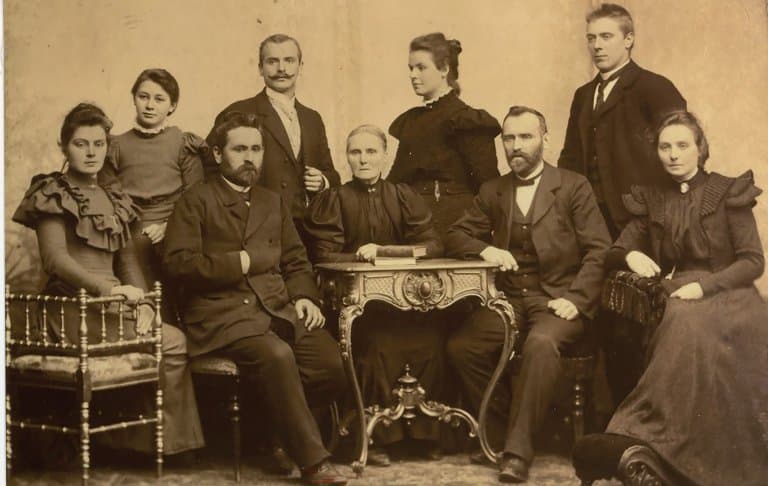
The 1891 census shows that several of the children, including Olaus and Ole Martin, no longer lived at home. Family history says that Ole Martin, at sixteen years old, traveled to America in 1889 to look for his older brother. They had not grown up together, but Olaus may have inspired him. Did Ole Martin leave to find the brother his family hadn’t heard from in years — or simply to see the world? Perhaps both.
First Journey to America
A worn immigration log from the Port of New York shows that Ole Martin Vølstad set foot in America on May 23, 1889. He traveled via Liverpool aboard the steamship City of New York. According to his own accounts, he slept on a burlap sack during the crossing.
In the log, he appears as Martin Volstad. He kept his first name, but the Norwegian “ø” in his last name was replaced with “o.” Later, he also adopted the spelling with a “W” in his surname.
Odd Jobs on the West Coast
Martin’s timing was fortunate. Based on his own notes and family stories, we know that he initially stayed in the western regions and worked a variety of jobs.
He labored at a sawmill in Tacoma on the Pacific Coast, fished for salmon near Chilkoot Fjord in Alaska, and later moved on to Juneau. There, he spent four years working in mines extracting gold-bearing quartz.
A Harsh Passage from Alaska into Canada
In January 1894, Martin left Alaska. Together with a man from California, he set out for the Yukon and the Klondike River, carrying enough food and gear to last two years.
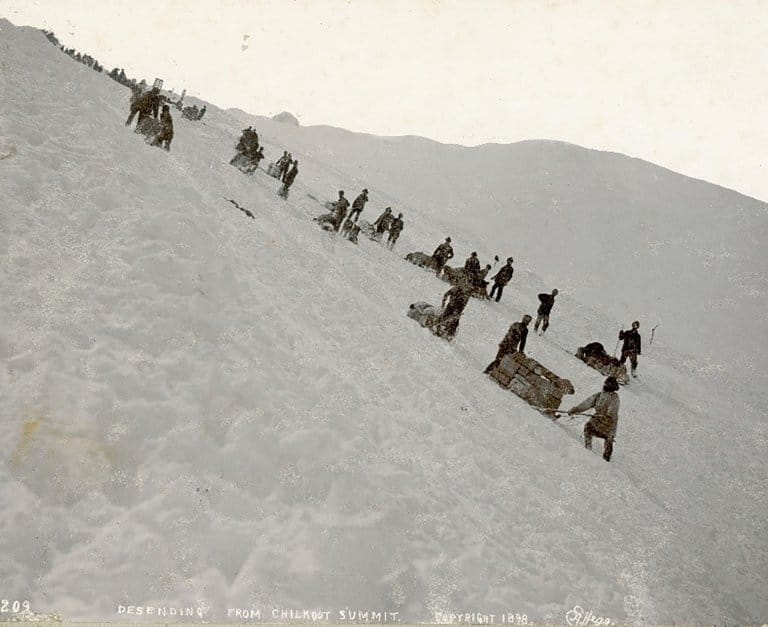
The first leg of the journey was by boat along the Alaskan coast, followed by a grueling hike over a mountain pass he described as “Th Sommet.” The pass stretched about 30 miles, and the terrain was “very steep and difficult to traverse.” It took two months to haul all their supplies across.
Building a Boat and Moving On
At Lake Bennett, Martin and several others stayed for about two months to build a boat. They felled trees and constructed a 30-foot flat-bottomed craft. After a month of work, the boat was finished — but it still needed to be sealed. To make the wood swell and tighten, they chopped holes in the ice and left the boat in water for several weeks.
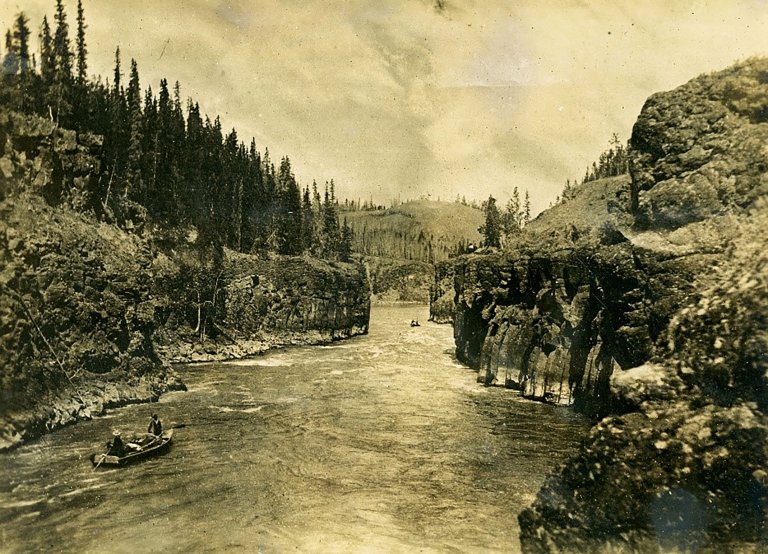
When the boat was finally ready, they pushed on. They navigated the Whitehorse Rapids and Miles Canyon, where all supplies had to be portaged overland. By June 1894, they reached Circle City — the largest settlement on the Yukon River before the Klondike Gold Rush. Founded in 1893 as a supply hub for miners at Birch Creek, Circle City quickly became a key center for activity in the region.
Circle City and Gold Panning
We know little about Martin’s success in Circle City, but evidence suggests he learned the technique of placer mining there. Unlike hard-rock mining, placer mining separates gold from sand and gravel. The simplest method uses a gold pan filled with sand and water; as the pan is swirled, the gold settles at the bottom.
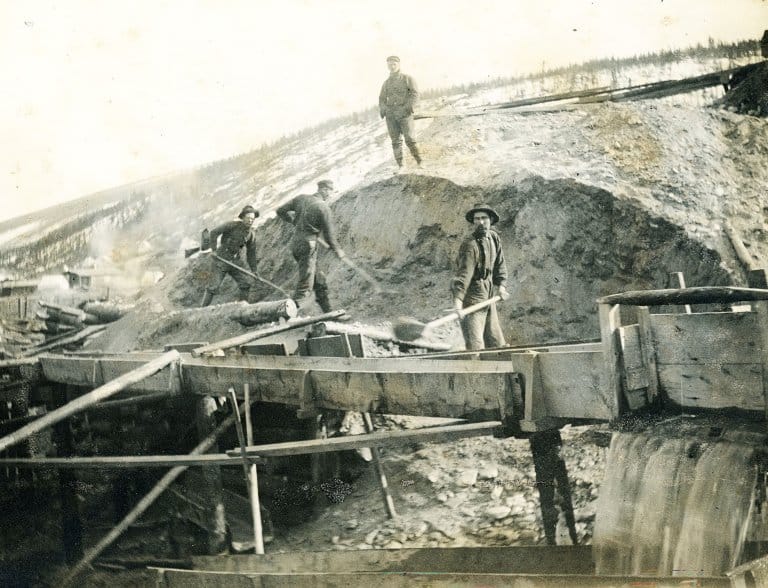
To reach gold-bearing gravel, miners had to dig through frozen ground in winter. At night, they burned fires to thaw the earth a few feet down, then dug during the day.
In summer, the work shifted to washing sand and gravel with water. Panning was slow. When the piles grew large, miners used sluice boxes — long wooden troughs with riffles that trapped gold as water and sediment flowed through.
Toward Klondike and Dawson
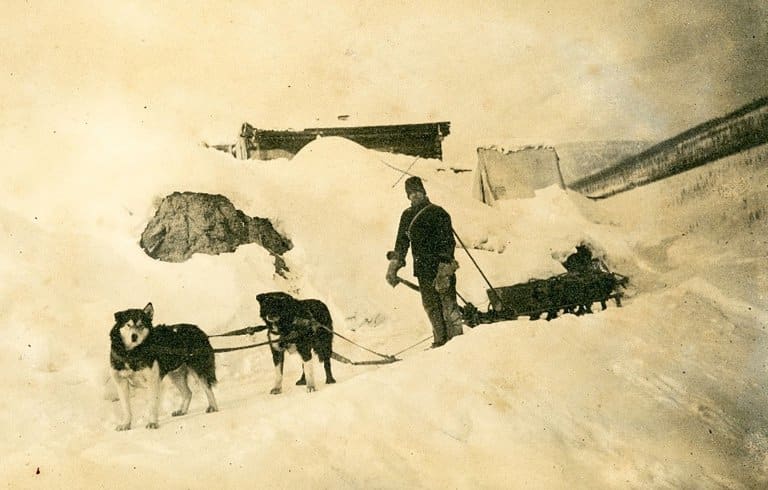
Circle City emptied almost overnight when news of the Klondike strike broke. The usual route was along the frozen Yukon River by sled and dog team. Martin likely headed for Dawson in February 1897.
In the Jarlsberg and Laurviks Amtstidende on August 27, 1897, a Mr. Hestwood reported:
When the great riches in Bonanza Creek were discovered, people flocked from all around; the town of Circle City, which previously had about 2000 inhabitants, now practically no longer exists, and the demand for sleds and dogs to get over the mountains was so great that many paid 1000-1800 Norwegian kroner for such a means of transportation.
No Reunion with His Brother
As far as we know, Martin never found his brother Olaus.
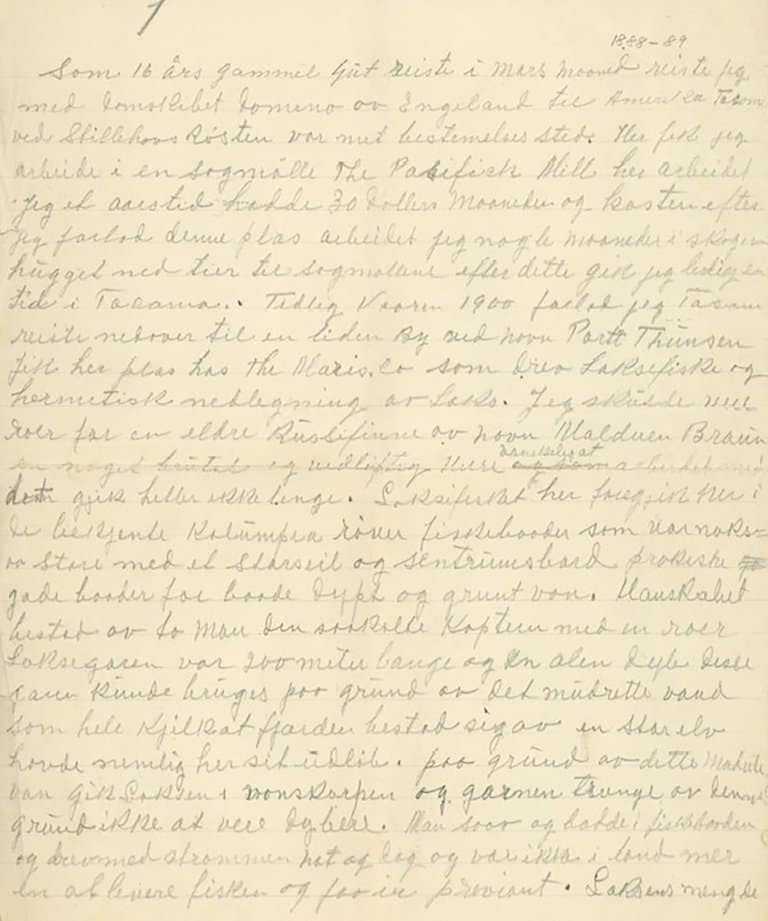
Martin’s Own Notes
Claiming French Gulch
Martin Wølstad struck it big as a gold prospector in the Klondike. His success began when he and Englishman Daniel Sanderson secured a claim they believed in. It was located in French Gulch, right next to the exceptionally rich claims Eldorado No. 16 and 17. Their claim measured 60 by 180 meters and was named French Gulch No. 0.
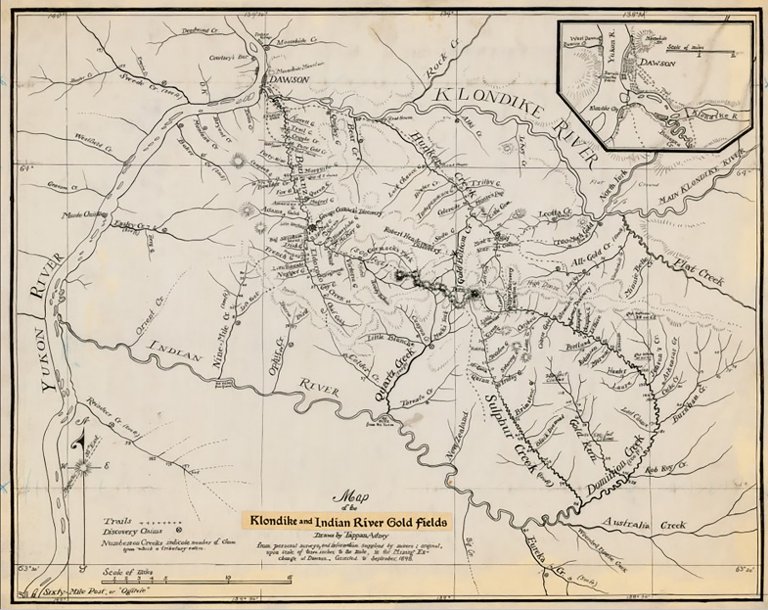
Working the Claim
Martin and Daniel received their mining permit in December 1897. Winter and spring of 1898 were spent digging as much as possible. They hired laborers at $15–$20 a day, a high wage for the time. Through the winter, piles of sand and gravel grew — ready for washing when summer came.
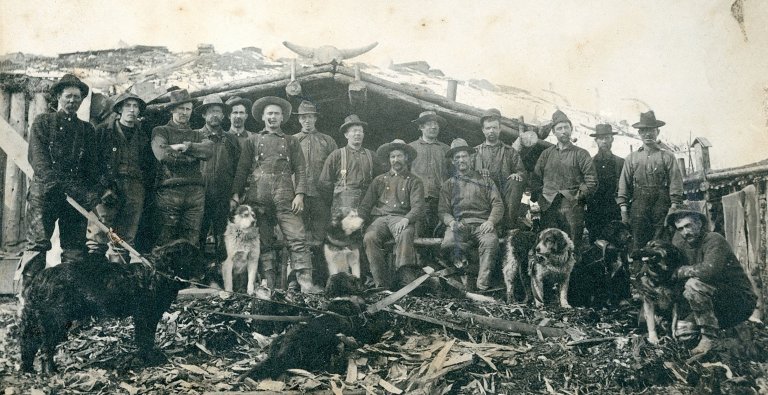
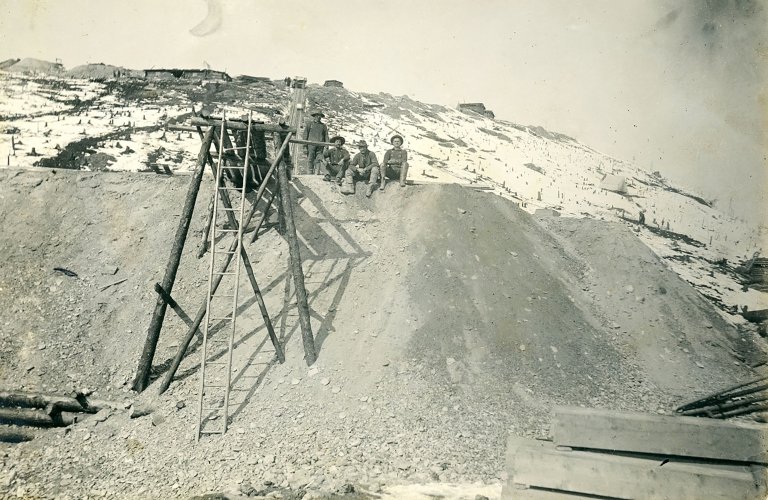
Photographer: Asahel Curtis. Archival reference: The National Archives of Norway, Pa 0988 – Wølstad, Ole Martin, AV/SAST-A-102674/U/L0001.
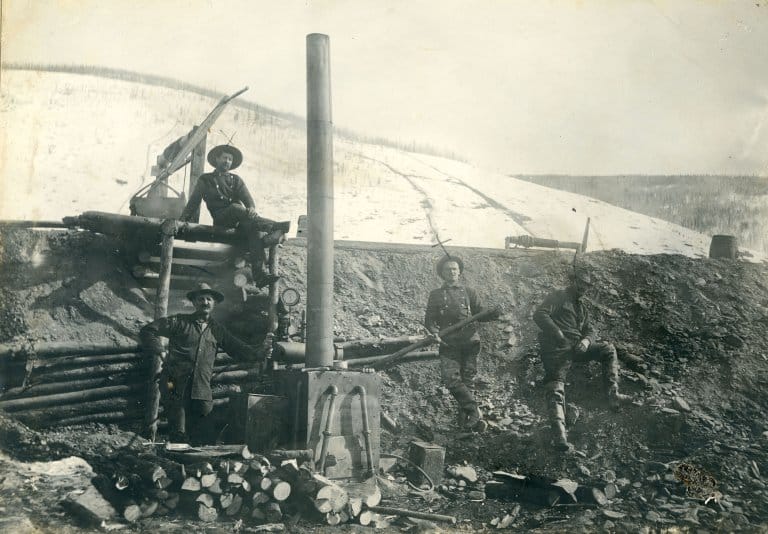
Off to San Francisco
Martin and Daniel left the Klondike in 1898. On July 29, the San Francisco Call published an interview with Daniel under the headline:
“May Have Found the Klondike Mother Lode.”
The article reported that the partners had taken $150,000 in gold from their claim. Sanderson described striking gold quartz near French Gulch and plans for further development, including building a tramway.
Read the newspaper article in the San Francisco Call.
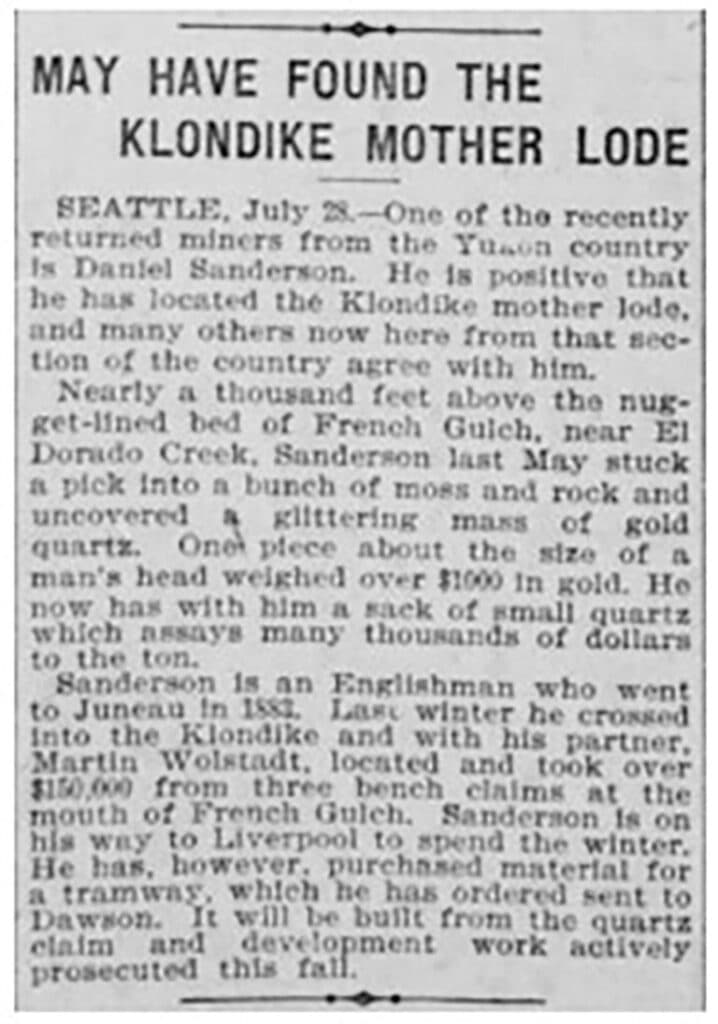
One of the recently returned miners from the Yukon country is Daniel Sanderson. He is positive that he has located the Klondike mother lode, and many others now here from that section of the country agree with him.
Nearly a thousand feet above the nugget-lined bed of French Gulch, near El Dorado Creek, Sanderson last May stuck a pick into a bunch of moss and rock and uncovered a glittering mass of gold quartz. One piece about the size of a man’s head weighed over $1000 in gold. He now has with him a sack of small quartz which assays many thousands of dollars to the ton.
Sanderson is an Englishman who went to Juneau in 1883. Last Winter he crossed into the Klondike and with his partner, Martin Wolstadt, located and took over $150,000 from three bench claims at the mouth of French Gulch. Sanderson is on his way to Liverpool to spend the Winter. He has, however, purchased material for a tramway, which he has ordered sent to Dawson. It will be built from the quartz claim and development work activity prosecuted this fall.
Back Home — and One Last Trip
Martin returned to Tasta in the fall of 1898 but went back to America right after New Year’s in 1899. He sold his claim and ended his gold-prospecting life in Canada, ready to settle down at home as he had planned.
The Klondike Gold Rush by the Numbers
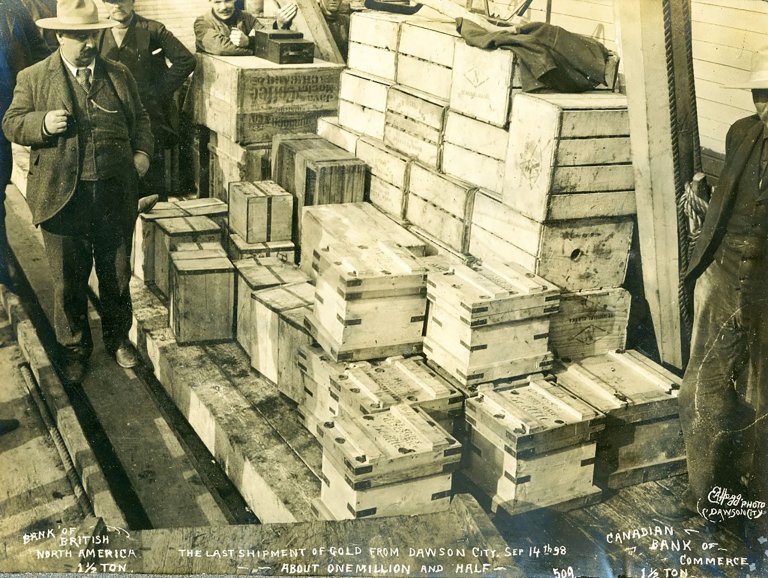
About 100,000 people set out to try their luck in the Klondike. Only around 30% made the grueling journey. During three years of intense activity, roughly 13% actually found gold. Martin was among the fortunate few.
A Glimpse into Martin’s Photo Album
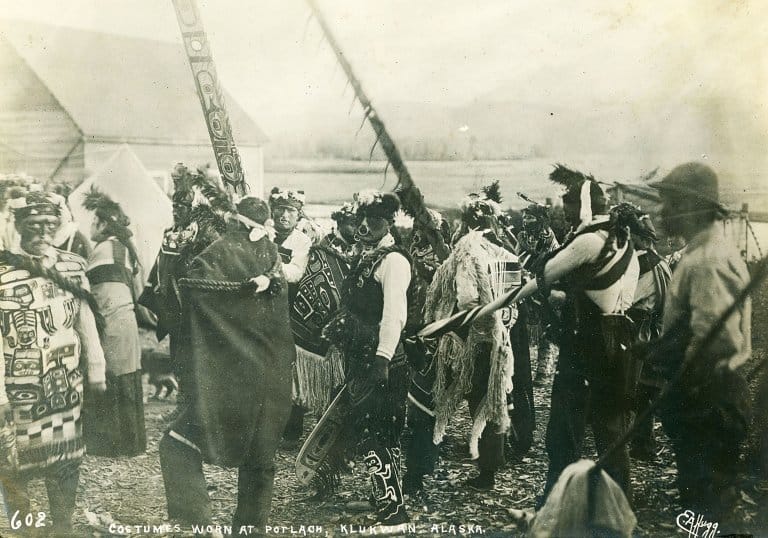
More than a quarter of Martin’s photo album features images of Indigenous life in the Yukon. The Tlingit people were renowned for their Chilkat woven blankets, carved totem poles, and fine craftsmanship. Some photos also depict potlatch ceremonies.
The Wedding in 1900
Waiting for Martin in Norway was his fiancée, Inger Roth. The couple married on Thursday, June 14, 1900, with Martin’s brothers Thore and Fredrik serving as best men. Many guests attended the celebration in their newly built home.
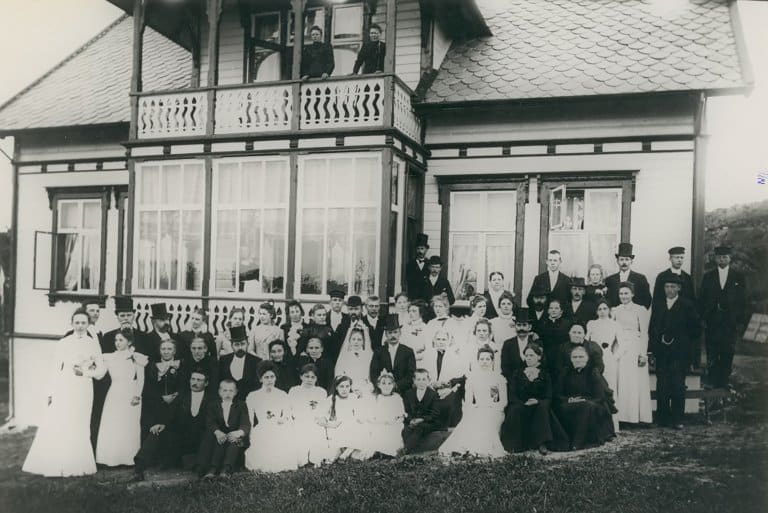
The photo is privately owned but has been approved for publication in this online exhibition.
Theft During the Wedding Party
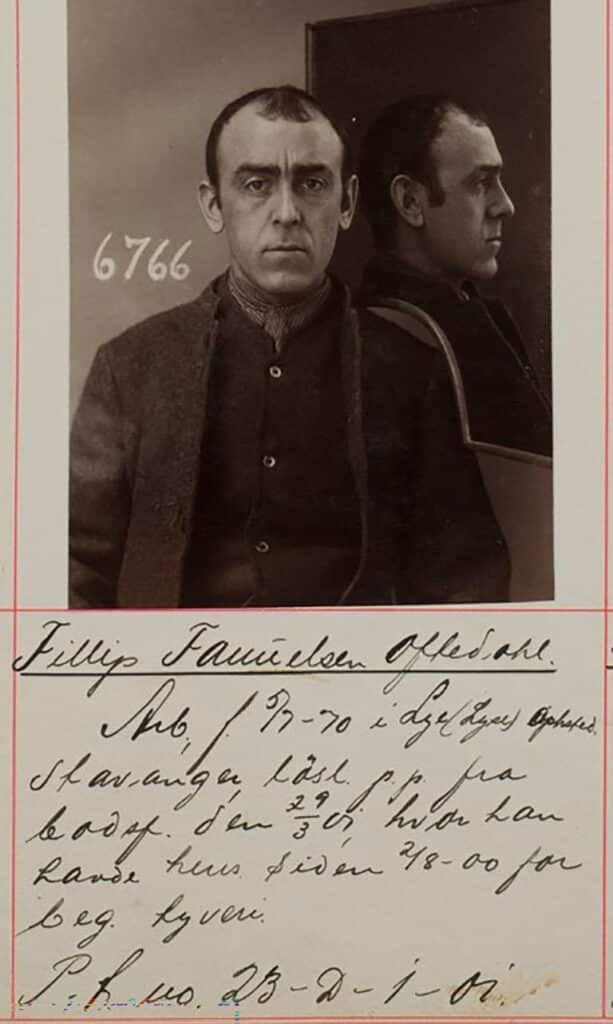
It was widely known that Martin Wølstad had grown wealthy from gold prospecting. The day after the wedding, Martin discovered that valuables —including a gold nugget — had been stolen. He reported the theft and named his cousin, Filip Oftedahl, as a suspect.
The case made headlines across Norway. Stavanger Aftenblad described the incident as a “massive theft” and reported that the bank ledger, securities, and gold were recovered. Filip Oftedahl was sentenced to 12 months of hard labor and sent to Botsfengselet. Martin regained almost everything except for 20 NOK spent on beer and a carriage ride. After several prison terms, Filip eventually emigrated to America.
“Klondike” Comes to Tasta
In the 1900 census, Martin’s occupation was listed as “man of means.” His farm produced potatoes, grain, fruit, and kept a few animals. The property was recorded as “Klondike” (sometimes spelled “Klondyk”) in mortgage register and fire insurance register — almost certainly a name Martin chose himself.
By 1910, Martin was a merchant. He and Inger had eight children, plus a nanny and a maid. Among the children were two sets of twins. Ten years later, Martin was a rentier (living off investments) and father of eleven. He and Inger remained at Klondike in Tasta for the rest of their lives. In the local community, Martin was known as “the Gold Man.”
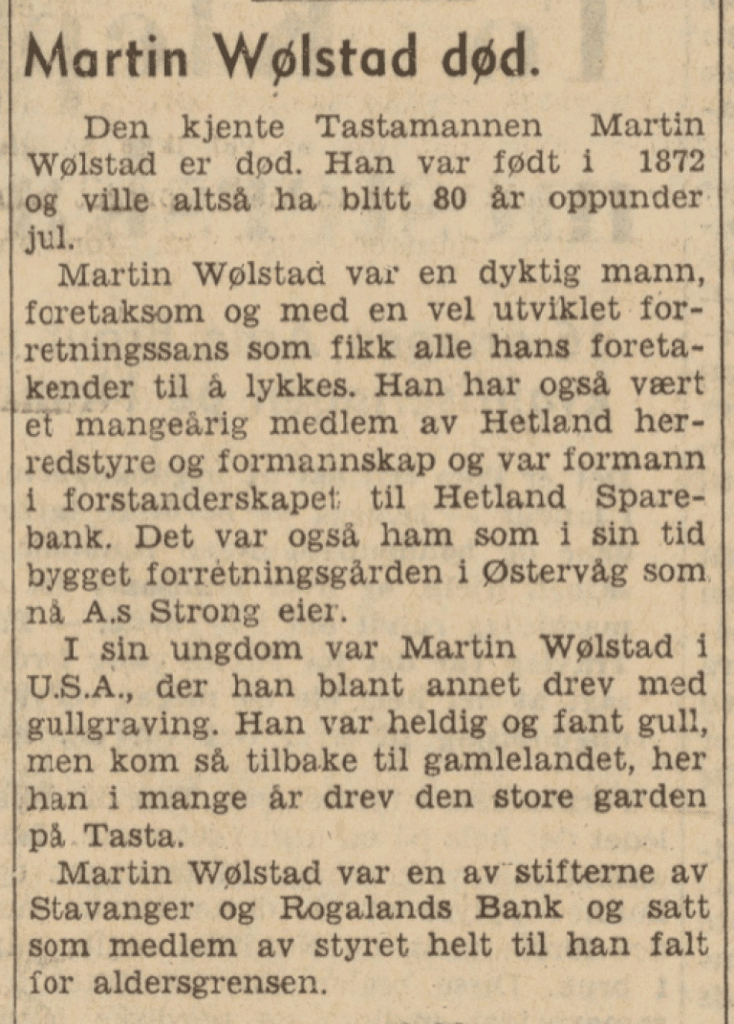
Archival records that describe the theft and its consequences
Verdict
Issued against Shoemaker Filip Fanuelsen Oftedal on July 26, 1900, charged with theft for the fourth time
The Public Prosecutor for Lister og Mandal and Stavanger District Court, in a decision dated July 13 and served on the 19th of the same month, indicted Filip Fanuelsen Oftedal under Penal Code Chapter 19, §1 in conjunction with §7, subsection 2(b), for having previously been convicted of theft on three occasions. On June 14, 1900, without the owner’s consent and with the intent of unlawful gain for himself or others, he removed from the Tastad farm in Hetland a cash box belonging to Martin Vølstad. The contents included:
- a passbook from Stavanger Privatbank
- various securities totaling NOK 130,188
- some unprocessed gold worth approximately NOK 800
- and about NOK 1,100 in cash.
The case was handled in accordance with §373 of the Criminal Procedure Act. Based on the defendant’s full and unconditional confession – corroborated by witness testimony – the court found sufficient evidence to convict him as charged.
The defendant is therefore found guilty of repeated theft under Penal Code Chapter 19, §1 in conjunction with §7, subsection 2(b), and is sentenced to 12 months of hard labor. In determining the sentence, the court considered both the high value of the stolen items and the defendant’s prior criminal record. However, it also took into account that the financial loss to the victim was relatively minor, as nearly all the cash and securities were recovered – except for about NOK 20. The time the defendant spent in pre-trial detention was also considered.
No claims for damages were submitted, and no court costs were incurred by the defendant.
The Court Rules:
Filip Fanuelsen Oftedal is sentenced to 12 months of hard labor for repeated simple theft under Penal Code Chapter 19, §1 and §7, subsection 2(b).
The sentence is to be carried out under the direction of the prosecuting authority.
The verdict was read aloud to the defendant, who accepted it. He was then handed over to the officer on duty for transfer to custody.
The court session lasted three hours.
Signed:
Gabrielsen (acting), Rasmus A. Kydland, O. C. Høiland
In fide: Gabrielsen (acting)
This migration story was written by Hanne Karin Sandvik (Senior Adviser) in collaboration with Ine Fintland (Senior Archivist) and Synnøve Østebø (Archivist).
Key contributors include Martin Wølstad Jr. and Hans Ivar Sømme.
The article was originally written in Norwegian and translated into English using Copilot, based on the prompt: “Translate idiomatically for an American audience. The article will be published on the website of the National Archives of Norway. Use terminology appropriate for a U.S. readership, and ensure the language is clear and concise.” The final version was reviewed and edited by Ine Fintland and Kayla Marie Tungodden (Senior Advisor) for clarity and accuracy.
In this online exhibition, we’ve used the following types of historical sources:
- Parish records to find information about baptisms, confirmations, marriages, and deaths.
- Census records to get an overview of who lived together and where they were residing.
- Mortgage registers and deed books to trace registered purchases and sales of properties
- Seamen’s rolls and to learn more about individuals who signed on to ships and sailed abroad.